

BOARD ELECTION CANDIDATES
The Open Education Conference has launched a community election process to select six new members for the Board of Directors, who will serve two-year terms starting in January 2027.
Voting will open Monday, November 30 and close Friday, December 4th.
For information about how to vote, please visit the Election FAQ page.
CANDIDATE PROFILES
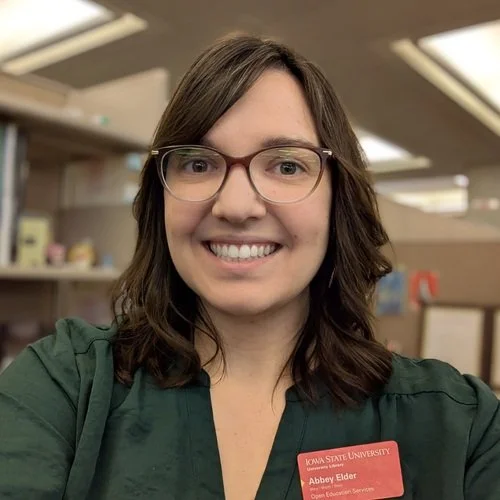
Abbey Elder
Open Education Services Librarian, Iowa State University (Iowa, USA)
Briefly describe your background and the perspectives, skills and experiences (lived or professional) you would bring to the Open Education Conference Board of Directors.
I have 9 years of experience in open education. I currently lead my institution's Open Education Services unit and oversee grants, publishing, committees, and workshops. I also lead my state's OER action team, which provides support for local OER initiatives. The heart of my work is in helping practitioners find their way to open education, and making that path navigable for them. I would bring that perspective, as someone who understands the needs of newcomers and leaders alike, to the board.
Why are you interested in serving on the Open Education Conference Board of Directors, and what makes you a strong candidate?
I have attended every OpenEd Conference since 2017. This experience gives me some perspective on where the conference has been and how it could develop in the future. In addition to attending, I have worked on several "behind the scenes" projects that support those new to OER and/or the conference, such as the launch of the Buddy Program and the OER 101 Pre-Conference Workshop in 2025. Moving forward, I'd like to find more ways I can help ensure that the conference serves all its audiences.
How do you envision the future of the Open Education Conference?
I would like to see the Open Education Conference continue on its current trajectory while expanding opportunities for practical engagement. Specifically, I'd love to see the conference build more spaces for educators to share their work, for case studies or digital posters to stir up new connections, and for those who are new and established supporters of open education to find common ground with one another for ongoing collaboration. None of these ideas are new, but there is room to do more.
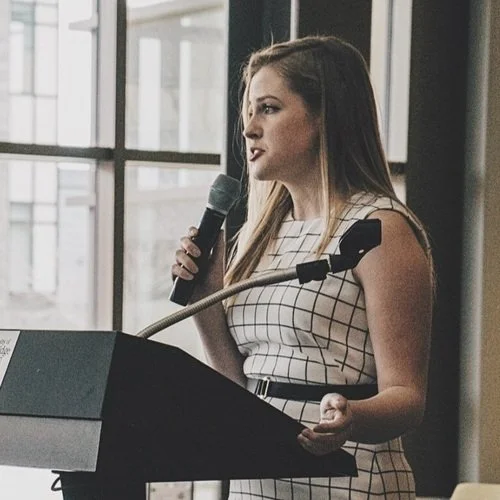
Hailey Babb
OER Program Director, The Alberta Library (Alberta, Canada)
Briefly describe your background and the perspectives, skills and experiences (lived or professional) you would bring to the Open Education Conference Board of Directors.
My journey in OE began nearly 10 years ago as a student leader at the University of Lethbridge in Alberta, Canada, where I brought open education before policymakers at all levels of government. From there, I joined SPARC's Open Education team and led projects such as the OE Leadership Program (and even helped plan the Open Education Conference for 6 years!) I now work as the OER Program Director at The Alberta Library, where I direct OER initiatives across Alberta's post-secondary sector.
Why are you interested in serving on the Open Education Conference Board of Directors, and what makes you a strong candidate?
After having spent the last several years supporting the conference as staff, I hope to be able to share my learnings, experiences and perspectives as a member of the Advisory Board. I believe deeply in the conference's core value of shared leadership, and would be excited at the opportunity to act as a resource for current leadership alongside new and unique voices. I also hope to share my perspectives as someone participating in the conference from outside of the United States.
How do you envision the future of the Open Education Conference?
I see the Open Education Conference as more than just an annual event. It serves as connective tissue for the OE community, as well as a reminder that each one of us working to advance this cause is not in this fight alone. In a time where OE (and higher education more broadly) face many existential challenges, I hope that the conference can continue to serve as resilient infrastructure for our community and create safe, dedicated space for progress.

Irakli Matcharashvili
Professor, Georgian American University/Ilia State University (Tbilisi, Georgia)
Briefly describe your background and the perspectives, skills and experiences (lived or professional) you would bring to the Open Education Conference Board of Directors.
I'm a Georgian educator and quantitative education researcher with experience in U.S. public schools and universities in Georgia. I teach machine learning at Georgian American University and pursue a PhD in Education at Ilia State University. At OpenEd26, I presented research on whether U.S. Open Textbooks Pilot grants reach students most in need. I bring expertise in educational equity, program evaluation, data science, and perspectives from education systems beyond North America.
Why are you interested in serving on the Open Education Conference Board of Directors, and what makes you a strong candidate?
I want to help turn the conference's commitment to equity into meaningful participation and evidence-informed action. As an OpenEd26 presenter, researcher, and lecturer, I can contribute analytical rigor, program evaluation, accessible communication, and the perspective of someone working between U.S. and Georgian education systems. I would work collaboratively to elevate underrepresented voices, strengthen international engagement, and make research useful to practitioners.
How do you envision the future of the Open Education Conference?
I envision OpenEd as a truly global, community-led gathering where students, educators, librarians, and researchers learn with,not just from, one another. It should remain accessible through meaningful virtual participation, actively welcome voices from underrepresented countries, and connect research with classroom practice and policy. I would love to see more cross-border partnerships, student leadership, and transparent ways to measure whether open education is advancing equity.
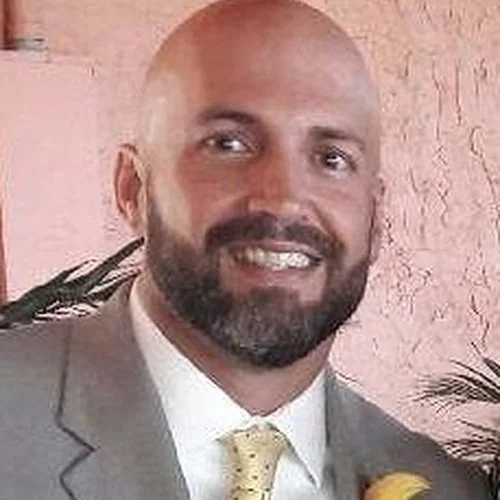
James Vincent
Instructor, Greenville Technical College (South Carolina, USA)
Briefly describe your background and the perspectives, skills and experiences (lived or professional) you would bring to the Open Education Conference Board of Directors.
Technology professional, cybersecurity practitioner, and doctoral researcher focused on the intersection of artificial intelligence, cybersecurity education, and digital innovation. Experienced in IT operations, technical support, systems administration, and technology implementation, with a passion for leveraging emerging technologies to improve security, learning outcomes, and organizational performance.
Why are you interested in serving on the Open Education Conference Board of Directors, and what makes you a strong candidate?
I would be interested in serving on the Open Education Advisory Committee Board because I believe in making education more accessible, inclusive, and affordable for all learners. As a Computer Technology Instructor specializing in cybersecurity and artificial intelligence, I see the value of open educational resources in reducing barriers to learning while providing students with relevant, engaging, and up-to-date educational materials.
How do you envision the future of the Open Education Conference?
I would like to see a stronger emphasis on artificial intelligence, digital accessibility, and equitable access to high-quality educational materials. The conference should continue to encourage collaboration across institutions, provide practical strategies that educators can implement in their classrooms, and support the development of affordable, engaging, and student-centered learning experiences.
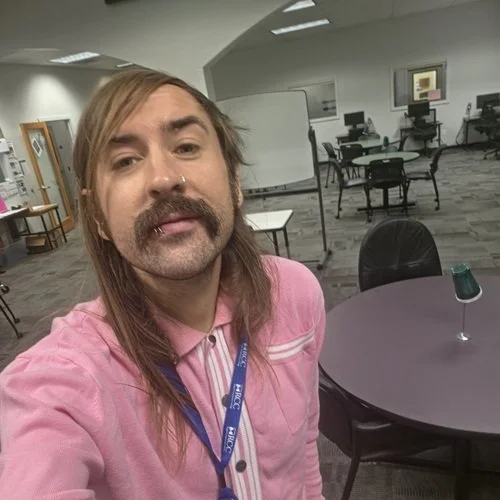
Justin Gallant
Philosophy professor and Faculty Academic Success writing tutor, Adams State University and Rogue Community College (Oregon, USA)
Briefly describe your background and the perspectives, skills and experiences (lived or professional) you would bring to the Open Education Conference Board of Directors.
My classroom is in a prison I enter by video or by mail using OERs. Students' handwritten work sometimes reaches me through a scanner; lockdowns outlast due dates, and course accounts can arrive after class begins. I also tutor at a community college, serve as an editor at Transformative Justice Journal, and pursue a PhD in philosophy and art theory, with an MA in humanities. As a neurodivergent, justice-impacted educator, I know that access is never just a matter of making something available.
Why are you interested in serving on the Open Education Conference Board of Directors, and what makes you a strong candidate?
I want to serve because conference programming makes an argument: through its speakers/formats and materials, it decides whose knowledge counts. I build prison education courses around constraints most online learning designs assume away. I bring experience creating curricula to navigating institutions, teaching across modalities, and working with students whose participation is overlooked. I would use that experience to broaden the conference's conversations and the ways people can enter them.
How do you envision the future of the Open Education Conference?
I want OpenEd to treat openness as a question its own practices must answer. Who can contribute without travel, a login, or reliable internet? I envision low-bandwidth participation, materials people can use offline and adapt, and programming shaped by educators and learners under restrictions that include incarcerated students where possible. The measure of success is whether those participants can change what the next conference looks like, and how accessible it can be for everyone.
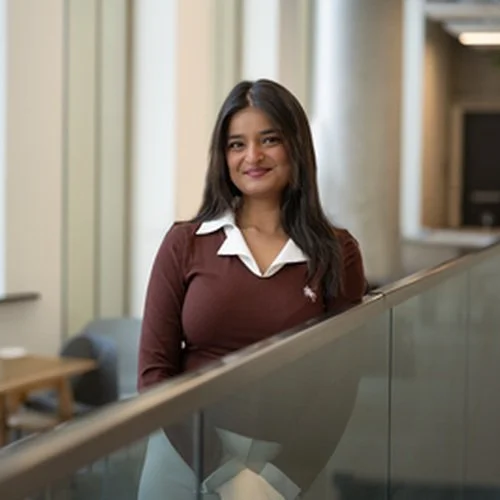
Pranjal Saloni (Incumbent)
Open Education Lab Supervisor, Ontario Tech U (Ontario, Canada)
Briefly describe your background and the perspectives, skills and experiences (lived or professional) you would bring to the Open Education Conference Board of Directors.
I see open education as more than making resources free; it is about reimagining how knowledge is created, shared, and experienced. As Open Education Lab Supervisor at Ontario Tech, I support faculty in developing accessible, inclusive OERs, supervise student teams, and lead collaborative projects and workshops. As a returning Advisory Board member, I bring hands on experience in student co-creation and a commitment to connecting local practice with global open education conversations.
Why are you interested in serving on the Open Education Conference Board of Directors, and what makes you a strong candidate?
I am interested in serving because I value the conference as a space where diverse perspectives shape the future of open education. My experience on the Advisory Board, combined with my work coordinating open education initiatives at Ontario Tech, gives me insight into both the conference community and institutional realities. I bring a collaborative mindset, strong project coordination and communication skills, and the ability to connect big-picture goals with practical, inclusive approaches.
How do you envision the future of the Open Education Conference?
I envision the conference as a space that doesn't just discuss the future of open education, but actively models it. A conference where students are co-creators, diverse global perspectives shape the conversation, and openness extends beyond resources to relationships, practices, and participation. I hope to see OpenEd conference embrace new formats, make room for emerging voices, and bridge the gap between bold ideas and meaningful change within institutions and communities.

Stephen Krueger
Affordable Course Content Librarian, University of Kentucky (Kentucky, USA)
Briefly describe your background and the perspectives, skills and experiences (lived or professional) you would bring to the Open Education Conference Board of Directors.
The two main themes of my career are open education and trans and gender diverse inclusion in libraries. I have nearly a decade of experience in open ed work at various types of academic libraries across different states, and this has been my primary focus for several years now. I also have published extensively on trans and gender diverse issues in library work. These threads come together in my work on the connections between open education and gender inclusion.
Why are you interested in serving on the Open Education Conference Board of Directors, and what makes you a strong candidate?
After attending for years and presenting in 2025, I know that I am not alone in finding this event incredibly valuable for the field. My experience developing professional spaces for open ed workers, which includes starting multiple community groups and serving on committees for open education organizations, will help me contribute meaningfully as a board member. My work in trans inclusion will help make the conference welcoming and supportive to participants of all gender identities.
How do you envision the future of the Open Education Conference?
In many ways, the conference is successful; I wish to continue the efforts to include those who cannot attend in person, highlight both broad relevant issues and niche subjects in the program, and create spaces for informal connection. There has been minimal centering of queer topics at this event in the past, and good intentions do not make an event (especially an in-person one) gender inclusive. I would like to make this a space that truly welcomes and celebrates trans and queer people.

Trent Kays
Assistant Professor of English (Professional Writing and Rhetoric), Augusta University (Georgia, USA)
Briefly describe your background and the perspectives, skills and experiences (lived or professional) you would bring to the Open Education Conference Board of Directors.
I’m a rhetoric and writing professor at Augusta University and a queer scholar who started at a community college. Directing our first-year writing program (2020-25) showed me how textbook costs shape who persists in gateway courses. I now lead two ALG-funded OER textbooks co-authored with students, on user research and on AI and learning. I bring AI literacy expertise, open pedagogy that treats students as authors, and event-planning experience as a GSOLE webinar co-chair.
Why are you interested in serving on the Open Education Conference Board of Directors, and what makes you a strong candidate?
Generative AI is reshaping both how students learn and what “open” means, and I want OpenEd to meet that moment through equity and not hype. That’s the core of my work: AI literacy curriculum for our first-year writing program, GSOLE programming, and AAUP chapter leadership. I also deliver: two funded OER projects, with a third under review. I’d gladly lead a project group on program design or AI and openness, and I’ll do the steady work between meetings that a community-led conference needs.
How do you envision the future of the Open Education Conference?
I see OpenEd leading on two fronts. First, AI: openly licensed work now trains proprietary models, and our community should shape norms for consent, attribution, and what openness means when content becomes training data. Second, who is in the room. Students, contingent faculty, and people at rural and under-resourced institutions should shape the program, not just attend it. That means durable hybrid access, funded student participation, and year-round community spaces beyond one annual event.
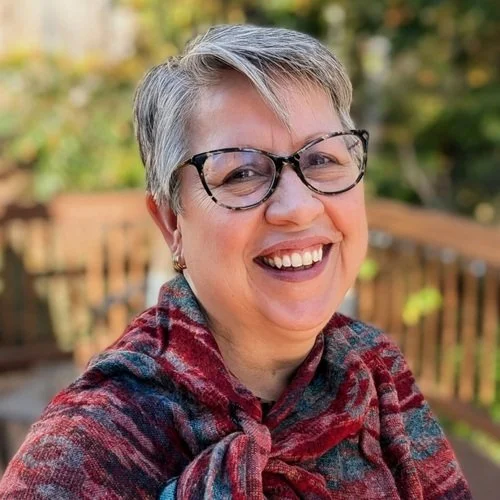
Veronica Van Ry
Sociology Faculty, Boise State University (Idaho, USA)
Briefly describe your background and the perspectives, skills and experiences (lived or professional) you would bring to the Open Education Conference Board of Directors.
I have taught sociology for more than 25 years and currently teach as an adjunct at both a university and a community college. I have taught online for many years and use OER in my courses. I regularly redesign my courses and assessments based on what is and isn't working for students. I bring the perspective of a long-term adjunct who is interested in how open education actually works in the classroom, especially for faculty with limited time, resources, and institutional support.
Why are you interested in serving on the Open Education Conference Board of Directors, and what makes you a strong candidate?
Open education asks us to think about access for students. I think we should also ask who has access to the professional conversations where open education is discussed and developed. Adjunct faculty may have fewer opportunities for conference funding, professional development, and institutional support, yet they can and do bring these ideas directly into their classrooms. I would like to make sure their experiences and perspectives are part of the conversation.
How do you envision the future of the Open Education Conference?
I envision OpenEd continuing to expand what we mean by "open," including thinking about openness in its own structure. Who has access to these conversations, and whose perspectives are missing? I would like to see the conference continue looking for ways to include educators whose roles, institutions, or resources make participation difficult. OpenEd gives faculty new ideas to think about and bring into their own classrooms, and I would like more educators to have that opportunity.

Zara Wilkinson
Reference and Instruction Librarian, Rutgers University-Camden (New Jersey, USA)
Briefly describe your background and the perspectives, skills and experiences (lived or professional) you would bring to the Open Education Conference Board of Directors.
As a founding member of the Open and Affordable Textbooks Program at Rutgers University, I have a decade of experience advocating for textbook affordability and the adoption of open educational resources. My primary appointment is as a reference librarian at Rutgers University-Camden, where I serve as the subject specialist for English and Communication; Philosophy and Religion; and Visual, Media, and Performing Arts. I have published several articles related to open education and librarianship.
Why are you interested in serving on the Open Education Conference Board of Directors, and what makes you a strong candidate?
After presenting at OpenEd24, I was struck by the feeling of community engendered by the conference. There is something empowering about bringing together people from different countries, backgrounds, and roles in support of a shared vision and goal. This year, I delivered two presentations and, hoping to become more involved, volunteered to review proposals. Now, I am excited to run for the Conference Advisory Board to find new ways to create and sustain that sense of community for others.
How do you envision the future of the Open Education Conference?
The future of the Open Education Conference is in the open education community, and in striving to be as intentionally inclusive, welcoming, and accessible as possible. As an alternating hybrid and virtual conference, OpenEd is well-positioned to serve all open education practitioners and researchers, whether they crave in-person connection or need remote options. Inspired by the 2026 conference theme, however, I am also interested in what gaps remain. Who and what are we still missing, and why?

BOARD OF DIRECTORS ELECTION
The Open Education Conference Board of Directors was established at the start of 2022 and is comprised of twelve members of the Open Education Conference community. Half of the board seats will rotate each year, allowing for new elections.
For information about how to vote, please visit the Election FAQ page.